
Orca Hypalon 828 vs 866 for RIB Tubes
Orca 828 and Orca 866 are both proven Hypalon fabrics for RIB tube manufacture and retubing. The difference is weight and denier, not a jump in quality. This guide explains what sets them apart, when we use each grade, and why reinforcement matters more than most owners realise.
- Orca 828 surface mass
- 1340 g/m²
- Orca 866 surface mass
- 1565 g/m²
- Both grades certified
- ISO + SOLAS
Standard weight. 990 denier base fabric. Default for leisure and most boats to around 7m.
Heavyweight. 1500 denier base fabric. Standard for boats over 7m and commercial, patrol and rescue craft.
Both carry ISO 6185 and SOLAS ISO 15372 certification. Both use CSM/CR construction.
Orca 828 and Orca 866 specification, side by side.
Orca 866 is the heavier and stronger of the two grades. Both are the same CSM/CR construction from the same manufacturer, so the difference is the textile reinforcement, not the quality of the material.
Nominal values published by Pennel & Flipo. Where a figure is given as two numbers, those are the warp and weft test directions.
| Specification | Orca Hypalon 828 | Orca Hypalon 866 |
|---|---|---|
| Base fabric | High-tenacity polyester | High-tenacity polyester |
| Yarn | 1100 dtex / 990 denier | 1670 dtex / 1500 denier |
| Surface mass | 1,340 ±140 g/m² | 1,565 ±165 g/m² |
| External coating | CSM / CR | CSM / CR |
| Internal coating | CR | CR |
| Tensile strength | ≥350 daN/5 cm | ≥500 / ≥460 daN/5 cm |
| Tear resistance | ≥20 / ≥16 daN | ≥33 / ≥35 daN |
| Adhesion | ≥15 daN/5 cm | Not separately published. Refer to Pennel & Flipo |
| Helium permeability | Less than 3 l/m²/24 h | Not separately published. Refer to Pennel & Flipo |
| Low-temperature resistance | -30°C | Not separately published. Refer to Pennel & Flipo |
| Standard width | ≥145 cm | 145 cm |
| Certification | ISO 6185 and SOLAS / ISO 15372 | ISO 6185 and SOLAS / ISO 15372 |
| UV resistance | Strong, CSM compound | Strong, CSM compound |
| Typical application | Leisure, tenders and lighter commercial. Most boats to around 7m | Commercial, patrol, rescue and hard-worked craft. Boats over around 7m |
| Cost | Lower per metre | Higher per metre. The effect on a full retube quote is modest next to fittings and cladding |
Source: Pennel & Flipo Orca published technical data. Values are nominal and should be checked against the current manufacturer specification for certification or contractual work. We have not reproduced 866 figures that Pennel & Flipo do not publish separately.
828 vs 866: the core differences.
Both are genuine Orca Hypalon fabrics with the same CSM/CR construction. The choice is about matching fabric weight to boat size and how the boat is used.
Orca 828 is the standard-weight grade, the default for most leisure and lighter-duty RIB retubes up to around six to seven metres. Orca 866 is the heavyweight grade, the standard route above around seven metres and on commercial, patrol, rescue and hard-worked craft of any size.
Both are certified Orca Hypalon fabrics with CSM/CR construction. The choice is about matching fabric weight to boat size and duty, not about one being a better material than the other.
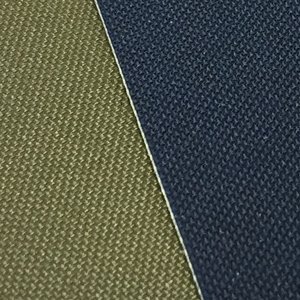
Orca Hypalon 828
The standard RIB retube fabric. Suited to leisure boats, yacht tenders and lighter-duty commercial applications up to around 7 metres.
- Surface mass: 1340 g/m² (±140)
- Base fabric: 990 denier polyester HT
- Tensile strength: ≥ 350 daN/5cm
- Tear resistance: ≥ 20 daN
- Suits leisure RIBs, tenders and day boats
- ISO 6185 and SOLAS ISO 15372 certified
Orca Hypalon 866
The heavier and stronger Hypalon fabric grade. Standard for boats over around 7 metres and for commercial, patrol, rescue and military RIBs of any size.
- Surface mass: 1565 g/m² (±165)
- Base fabric: 1500 denier polyester HT
- Tensile strength: ≥ 500 daN/5cm
- Tear resistance: ≥ 33 daN
- Suits commercial, patrol and rescue craft
- ISO 6185 and SOLAS ISO 15372 certified
Which grade is stronger and which is heavier?
Orca 866 is both heavier and stronger. The higher-denier base fabric drives the difference in mechanical strength, not a difference in material quality.
Orca 866 has a surface mass of 1565 g/m² against 828's 1340 g/m², a difference of around 225 g/m². Its tensile strength rating is ≥ 500 daN/5cm compared to ≥ 350 daN/5cm for 828, and its tear resistance is ≥ 33 daN against ≥ 20 daN.
The higher-denier base fabric in 866, 1500 denier against 828's 990 denier, is what drives the difference in mechanical strength. A heavier yarn produces a stronger fabric base, which is why 866 is the standard for larger hulls where tube panels carry greater structural loads.
This is not a quality difference. Both grades use the same CSM/CR construction from Pennel & Flipo and carry the same ISO 6185 and SOLAS ISO 15372 certification. The choice is about matching Hypalon fabric grade to the structural demands of the boat and how it is used.
Both Orca 828 and Orca 866 are available across the main Orca Hypalon colour range. For colour selection, finishes and swatch guidance, see our Orca Hypalon colour chart.
Which should I choose?
Neither grade is simply better. 866 is stronger and heavier, and on a boat that does not need that strength it adds weight and cost without adding service life. Three common cases:
Leisure RIB under 6m
Standard-weight 828 is the right specification for the great majority of leisure boats. It carries the same CSM coating, the same UV resistance and the same certification as 866, and will give twenty years or more of service on a boat used at weekends. Put the budget into wear patches and rubbing strips instead.
Commercial workboat
Daily use, pontoon contact and crew boarding all argue for the heavier grade, particularly over about 7m. On smaller commercial boats, 828 with heavy-duty cladding at the contact areas is often the better value than 866 throughout.
Rescue or defence craft
Higher tensile and tear strength matters where the boat is worked hard, launched and recovered frequently, and expected to take abuse. This is the grade we specify for patrol, rescue and military work, usually with additional cladding and extra handles.
Not sure which grade your boat needs? Tell us the make, model, length and how the boat is used and we will specify it properly.
Order a new tube setColour is chosen independently of grade. Both 828 and 866 are available across the Orca range, so see the Orca Hypalon colour chart for the options. For what a full retube involves, see RIB retubing.
Boat length is a starting point, not the whole picture.
We look at the whole job before committing to a fabric specification. The 7-metre threshold is a practical guide, not a hard rule.
Plenty of commercial and working boats under 7 metres are retubed in 866 because the application warrants it. Equally, some leisure boats over 7 metres are retubed in 828 where the duty is light and the owner's preference is for the standard grade.
- Overall boat length, the main indicator for moving from 828 to 866.
- Intended use: leisure, commercial, patrol, rescue or military.
- How hard the boat is worked, hours in service, nature of operations.
- Whether the boat sees frequent boarding, abrasion or pontoon contact.
- Owner or operator preference for the heavier grade as a specification feature.
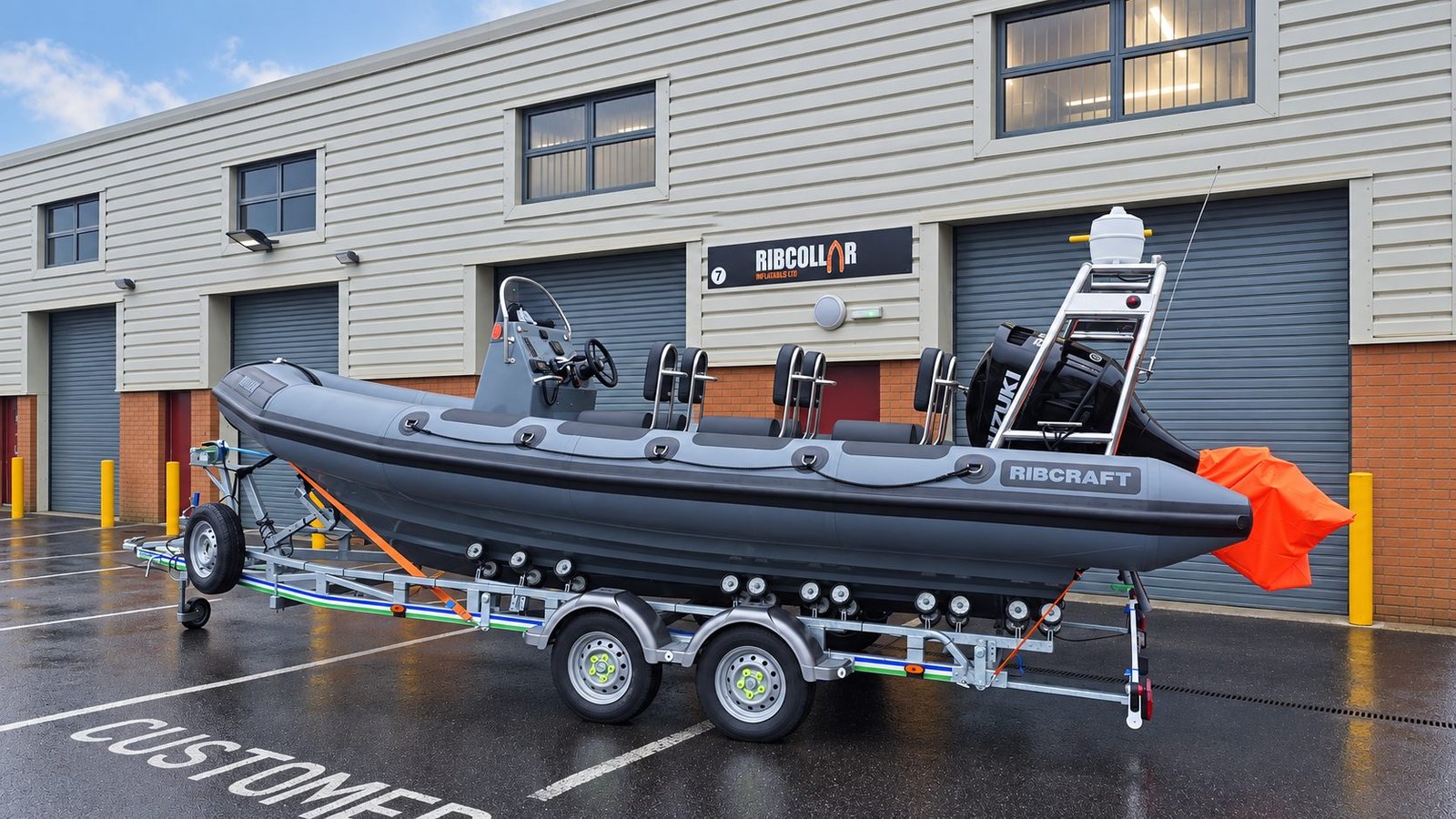
Fabric grade vs reinforcement: what matters more?
This is where owners often misread the specification. Choosing 866 over 828 does not protect the boat against wear in the way that proper reinforcement does.
The base fabric choice addresses structural strength and load-bearing performance. Wear protection is a separate question.
Whatever grade is used, we always recommend reinforcing areas that will see regular contact, abrasion or operational wear. That reinforcement strategy has more impact on long-term service life than the 828 vs 866 decision in most cases.
Rubbing Strips
Protect tubes where they make regular contact with pontoons, quays and other vessels. The most common reinforcement on working RIBs.
Most applicable on: commercial operators, harbour patrol, rescue craft, any boat mooring alongside regularly.
Cladding
Heavier wear protection including 3mm cladding for large-area wear. Most often specified on military, police and commercial hard-use craft.
Most applicable on: military and police RIBs, offshore patrol, commercial craft in demanding operating environments.
Boarding Wear Patches
Protect tube surfaces at the points where crew and passengers regularly step on when boarding. Relevant for most operational craft.
Most applicable on: sea safari, passenger RIBs, rescue and patrol, any operational craft with regular crew boarding.
Bow Reinforcement
Additional protection around anchor, recovery and fairlead points where the bow is more exposed to contact and chafe.
Most applicable on: RIBs in offshore or tidal environments, search and rescue, boats recovering lines and anchors regularly.
Practical note
Moving from 828 to 866 is not a substitute for proper reinforcement. A well-reinforced 828 tube will outlast an unreinforced 866 tube on a boat that works hard. We always discuss both as part of the specification.
828 vs 866: at a glance.
| Orca Hypalon 828 | Orca Hypalon 866 | |
|---|---|---|
| Fabric weight | Standard, 1340 g/m² | Heavyweight, 1565 g/m² |
| Typical boat size | Up to ~7m | 7m and above |
| Leisure use | Yes, standard choice | Yes, where specified |
| Commercial / patrol | Lighter-duty commercial | Yes, standard choice |
| Rescue / military | Some applications | Yes, preferred choice |
| UV resistance | Strong, CSM compound | Strong, CSM compound |
| Colour range | Full Orca range, all finishes | Full Orca range, all finishes |
| ISO / SOLAS cert | ISO 6185, SOLAS 15372 | ISO 6185, SOLAS 15372 |
Common questions on 828 vs 866.
Which Orca Hypalon grade is stronger, 828 or 866?
Orca 866 is the stronger grade. It has a tensile strength rating of ≥ 500 daN/5cm against ≥ 350 daN/5cm for Orca 828, and a tear resistance of ≥ 33 daN against ≥ 20 daN. The higher strength comes from the heavier-denier base fabric, 1500 denier in 866 compared to 990 denier in 828.
Which Orca Hypalon grade is heavier, 828 or 866?
Orca 866 is the heavier grade. Its nominal surface mass is 1565 g/m² compared to 1340 g/m² for Orca 828, a difference of around 225 g/m². On a full set of replacement tubes for a larger boat, this adds up to a measurable weight increase in the finished tube package.
Is Orca 866 much more abrasion-resistant than 828?
Not in practical day-to-day terms. The higher tensile and tear resistance figures in 866 are relevant to structural load at larger boat sizes, not to surface wear in the way most owners mean when they ask the question. Proper reinforcement has a greater effect on wear life than the fabric grade choice.
Which grade suits leisure RIBs?
Orca Hypalon 828 is the standard choice for leisure RIBs, yacht tenders and day boats up to around 6 to 7 metres. It delivers strong UV and weathering resistance and is the default RIB retube fabric for this market. Orca 866 can be used if the owner specifies it, but it is not normally necessary.
Which grade suits boats over 7 metres?
Orca Hypalon 866 is the standard specification for boats above around 7 metres. At greater lengths, tube panels carry larger structural loads and the higher tensile and tear strength of 866 provides a better match for the demands of the hull. The 7-metre threshold is a practical guide rather than an absolute rule.
Which grade suits commercial, patrol and rescue RIBs?
Orca Hypalon 866 is the standard choice for commercial, patrol and rescue RIBs. The higher tensile and tear strength make it better suited to the operational demands of working craft, regardless of boat length. Some smaller commercial and rescue RIBs are retubed in 866 because the application warrants it.
Does colour availability differ between 828 and 866?
No. Both Orca 828 and Orca 866 are available across the main Orca Hypalon colour range. Colour choice does not depend on which grade you select. For full colour options, finishes and swatch guidance, see our Orca Hypalon colour chart.
Can I choose Orca 866 on a smaller boat?
Yes. Many smaller commercial and working boats are retubed in 866 where the operator wants the heavier grade as part of the specification. It costs a little more and adds some weight to the finished tube package, but it is not a problem technically.
What matters more, fabric grade or reinforcement?
Both matter, but reinforcement is often the overlooked part. Good rubbing strips, boarding patches, cladding and bow protection extend the working life of a tube far more reliably than simply upgrading the base fabric grade. We discuss both as part of every retube specification.
Colour options
Need help choosing a colour as well as a fabric grade? Both Orca 828 and Orca 866 are available across the main Orca Hypalon colour range. See our Orca Hypalon colour chart for available colours, finishes and practical advice for RIB tubes.
Not sure which grade is right for your boat?
Send us the boat make, model, length and a few photos of the existing tubes. Ribcollar will advise on the right Orca Hypalon grade, finish, reinforcement strategy and fittings for the job.