
RIB tubes are attached either by bonding, by mechanical retention, or by a combination of the two. Around 99 per cent of the boats we see are bonded on, with the tube glued to a flange moulded into the hull.
Within bonded construction there are several arrangements: a gusset or hinge, a carrier flange with an internal strip, and a carrier flange with an edging rope. The mechanical systems are slide-on tubes, D-tubes on luff ropes, and the older bolt rope arrangement. Those are largely reserved for commercial, rescue, patrol and military craft, where a tube may need to come off in service.
- Most common
- Bonded onaround 99% of boats we see
- Bonded arrangements
- Threegusset, internal strip, edging rope
- Mechanical systems
- Threeslide-on, D-tube, bolt rope
- Affects retube?
- Yesmethod changes the work involved
Not sure how your tubes are held on? A few photos of the joint where the tube meets the hull will tell us, and it is the first thing we need to know to quote.
Get a retube quote for your attachment typeWhy the Attachment Method Matters
The way RIB tubes are attached to the hull is not a minor detail. Some systems are designed around a clean finish. Others are designed around serviceability, durability and easier future replacement.
On some boats the system is chosen mainly for appearance and production speed. On others it is chosen for practical service life and repair resilience. If you own, maintain or specify a rigid inflatable boat, knowing which one you have helps you make better decisions about repair and replacement. It affects:
- Durability under load
- Ease of future tube replacement
- The finish and appearance of the boat
- Wear points between hull and tube
- Suitability for hard commercial use
- Longevity of the tube installation
The Four Attachment Methods Compared
Each method is a different answer to the same problem: holding an inflatable collar onto a rigid hull so that it stays airtight, takes the loads, and survives years of flexing and abrasion.
| Method | Retention | How it works | Typically found on | Ease of future replacement | Chosen for |
|---|---|---|---|---|---|
| Gusset or hinge | Bonded | A shaped gusset panel acts as a fabric hinge between tube and hull, so the bond is not loaded directly as the tube works | Leisure and commercial RIBs. One of the most widely used arrangements | Standard bonded removal and flange preparation | Durability and movement tolerance. Suits workboats and heavier duty |
| Carrier flange with internal strip | Bonded | A carrier flange with an added internal fabric strip between hull and tube, closing the inside gap and increasing the bonded area | A wide range of production RIB builds | Standard bonded removal. More bonded area to clean back | Balance of strength, appearance and installation time |
| Carrier flange with edging rope | Bonded | A standard flange finished with an internal edging rope or trim along the inside edge of the tube | Higher-end boats where finish and presentation matter | Standard bonded removal. Trim detail to reinstate | Appearance and a tidy internal detail rather than extra bonded support |
| Slide-on tubes | Mechanical | Mechanical retention rather than bonding alone, so the tube can be slid off the hull | Police, rescue, military and other professional craft | The easiest of the six. Tube can be removed, stored or sent away for repair | Serviceability and through-life maintenance |
| D-tube on luff ropes | Mechanical | A D-section tube with a flatter inner face, retained on luff ropes. Changes how the tube sits against the hull | Commercial RIBs, patrol craft, rescue and specialist boats | Tube withdrawn from the rope track. Track must be sound and clear | Usable deck space and a task-focused layout |
| Bolt rope system | Mechanical | A rope or reinforced edge built into the tube, retained by a long metal bar or track fixed along the hull | Older RIBs, safety craft and specialist fleet vessels | Bar or track released, tube withdrawn. Fixings are often seized after years in salt water | Mechanical retention with a long service history on legacy craft |
The method is decided by the boat builder at the design stage and moulded or extruded into the hull. It is not something that can practically be changed at retube, so the attachment your boat has is the attachment it keeps. What changes is how the old tube comes off and what the hull edge needs before a new one goes on.
Bonded Systems
A bonded tube is glued to the hull. The tube is built with a skirt, an extension of the fabric below the tube proper, and that skirt is cold-bonded to a flange moulded into the hull along the full length of each side.
Done properly the joint is stronger than the fabric around it. There is no mechanical fastening to corrode, no track to clog, and no path for water to work its way in. Three arrangements cover almost all bonded construction, and they differ in how the joint handles movement and how the inside edge is finished.
Gusset or hinge method
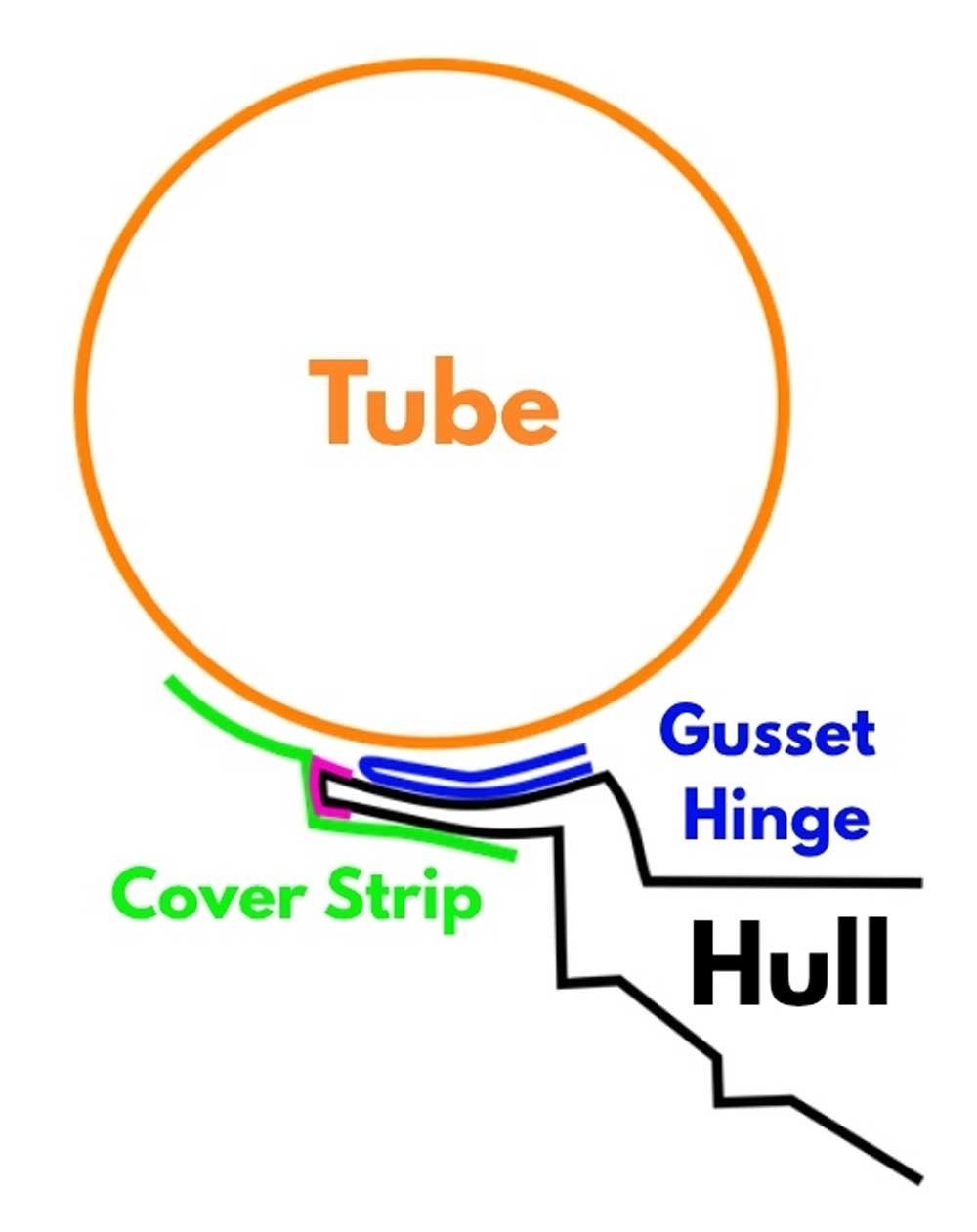
One of the most widely used attachment methods. It uses a shaped bonding arrangement with a gusset panel that acts as a fabric hinge between the tube and the hull. That gives the tube a more natural range of movement in service and helps the bond cope with the normal movement of the tube in changing conditions.
A RIB tube is always moving slightly as it inflates, deflates and works against the hull in use. The gusset creates a natural hinge point, which reduces direct stress on the glued joint and supports the tube more effectively over time. For many tube designs it balances flexibility, support and durability, and it is proven on both leisure and commercial installations.
- The tube can deflate without pulling straight down on the bond
- The hull edge is better protected
- The tube is less likely to be pinched against the hull
- Suits workboats and heavier-duty applications well
Carrier flange with internal strip
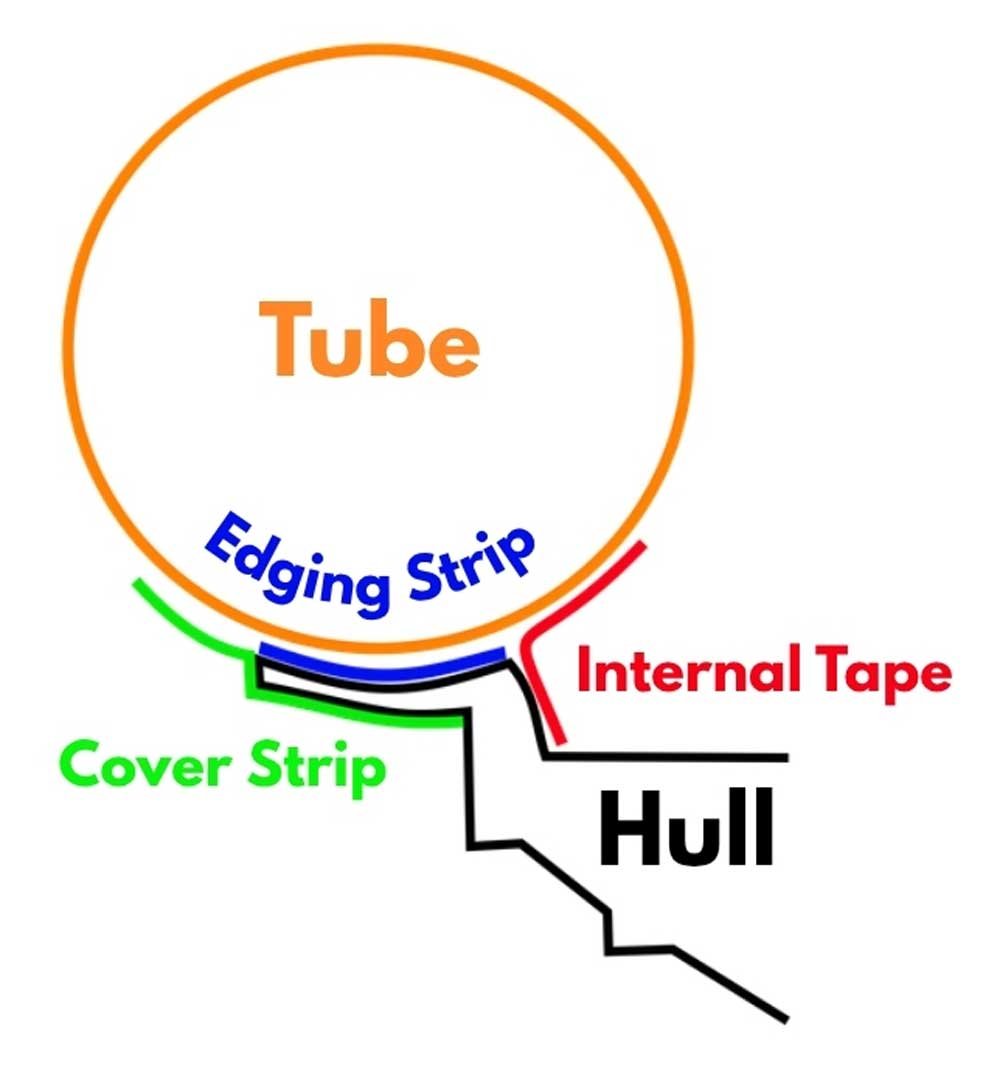
This builds on the basic carrier flange system by adding an internal fabric strip between the hull and the tube. It closes the inside gap, creates a cleaner finish and increases the bonded area between tube and hull.
On many production builds this method is chosen because it offers a practical balance between ease of installation, appearance and strength. It is a quick and effective way to fit tubes while giving a neater internal detail than a basic carrier flange alone.
- Cleaner internal finish inside the boat
- More bonded area between tube and hull
- Strong balance between appearance and durability
- Good balance between appearance, durability and installation time
Carrier flange with edging rope
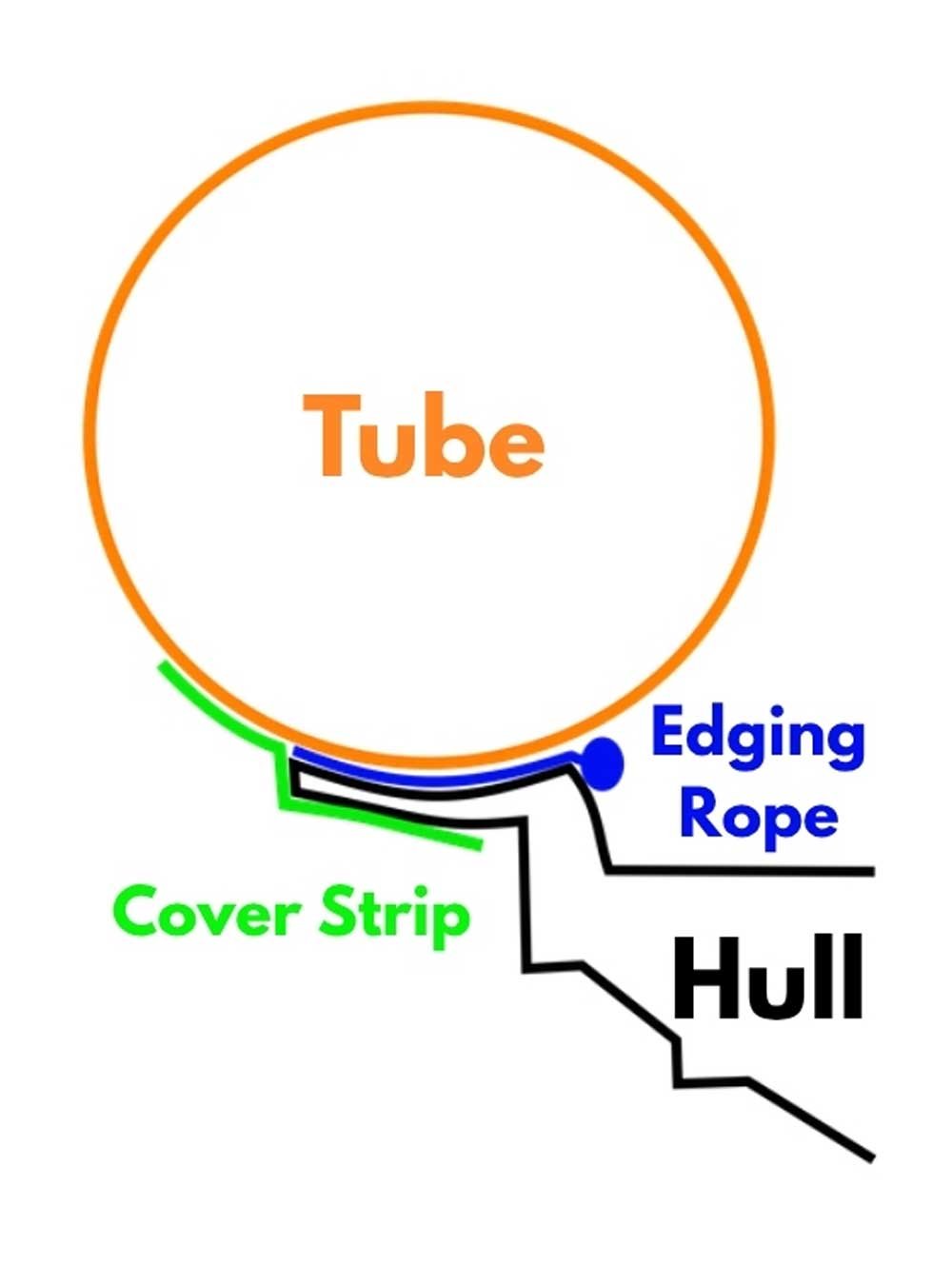
A standard flange system finished with an internal edging rope or trim detail along the inside edge of the tube. The purpose is a smarter, more refined appearance, covering the inside edge more neatly.
This is often seen where finish and presentation are important. Compared with a carrier flange and internal strip, it is more focused on finish than on adding extra bonded support area. For owners who want a tidy, more finished look to the tube installation, it remains a popular choice.
- Smart internal finish
- Better visual detail
- Suits higher-end boats where appearance is a priority
What Bonded Construction Means at Retube
The old tube has to be cut away and every trace of old adhesive removed from the flange before a new tube can be bonded down. That preparation is the single biggest piece of labour in a retube, and it is also where a poorly executed job fails. A flange that has been rushed will let go at the ends first, usually within a season or two.
Mechanical Systems
Mechanical systems use a retention arrangement rather than relying on bonding alone. They are chosen where serviceability matters: police, rescue, military and other professional craft where through-life maintenance counts as much as first-fit appearance.
Slide-on tubes
Slide-on tubes use a mechanical retention system rather than relying only on bonding. This method is widely used where serviceability matters, and it is the most practical of the six if a tube may need to come off during the boat's life.
Advantages
- Tube can be removed and stored
- Tube can be removed for repair
- Tube can be replaced more easily
Trade-offs
- The boat is often wetter in use
- Wear parts such as the luff rope may need more attention
- Some systems rely heavily on materials and build quality to prevent separation issues
D-tube on luff ropes
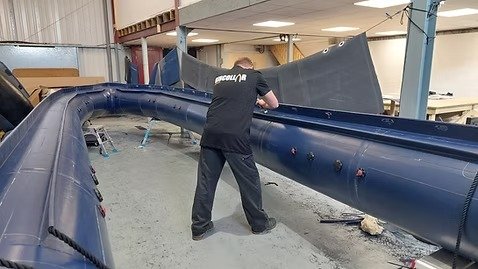
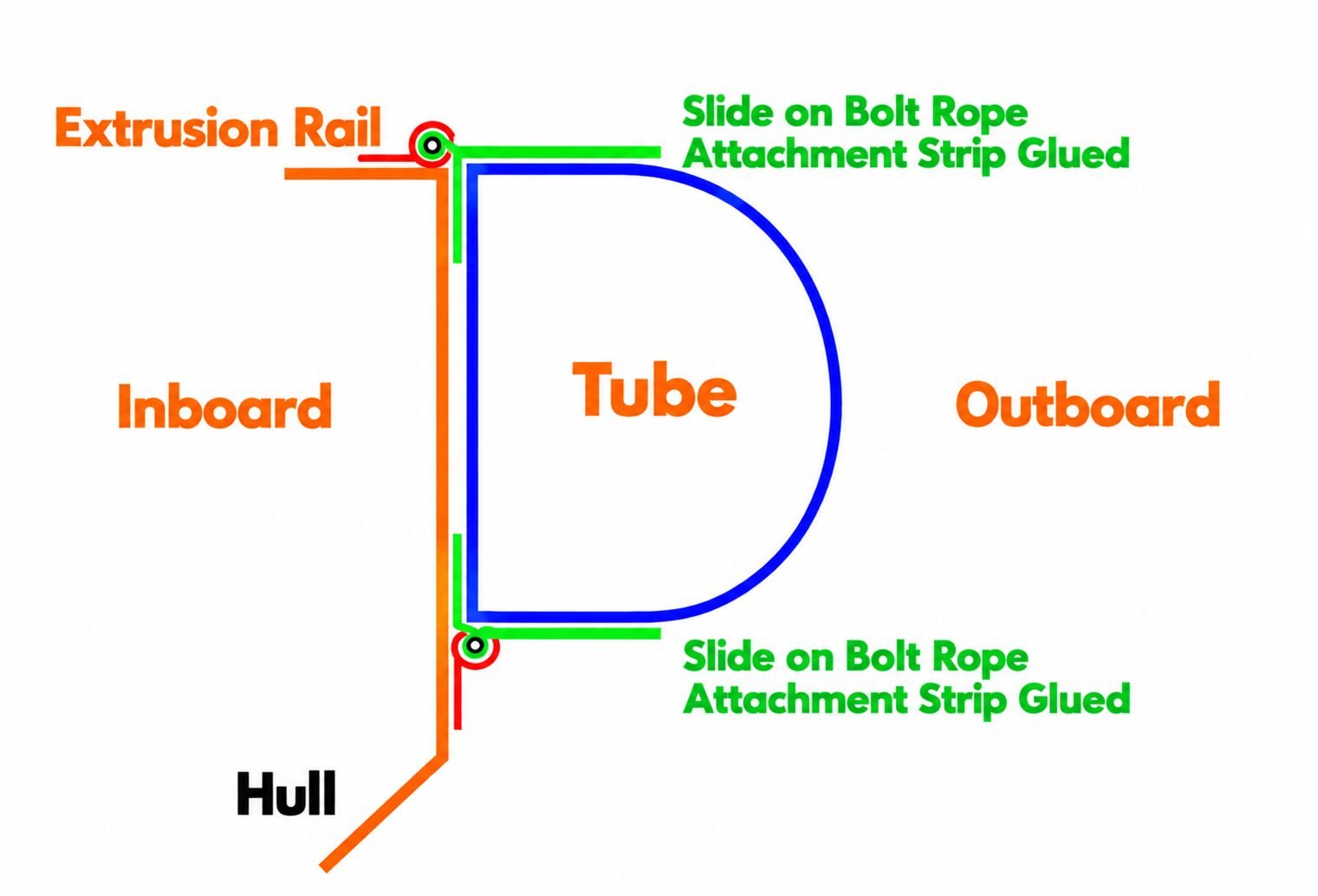
D-tubes are commonly used on commercial RIBs, patrol craft, rescue boats and other specialist boats where layout and working space matter as much as buoyancy. Unlike a traditional round tube, a D-tube has a flatter inner face, which changes how it sits against the hull and how the attachment system is designed.
This style is often chosen where operators want to maximise internal deck space, improve movement onboard and create a more practical working platform. By sitting differently to a conventional round tube, a D-tube can deliver a better balance between buoyancy, internal beam and usable layout.
- More usable deck space
- A practical layout for boarding, working and passenger movement
- A different balance between buoyancy shape and layout
- Well suited to commercial, rescue and specialist applications
Bolt rope system
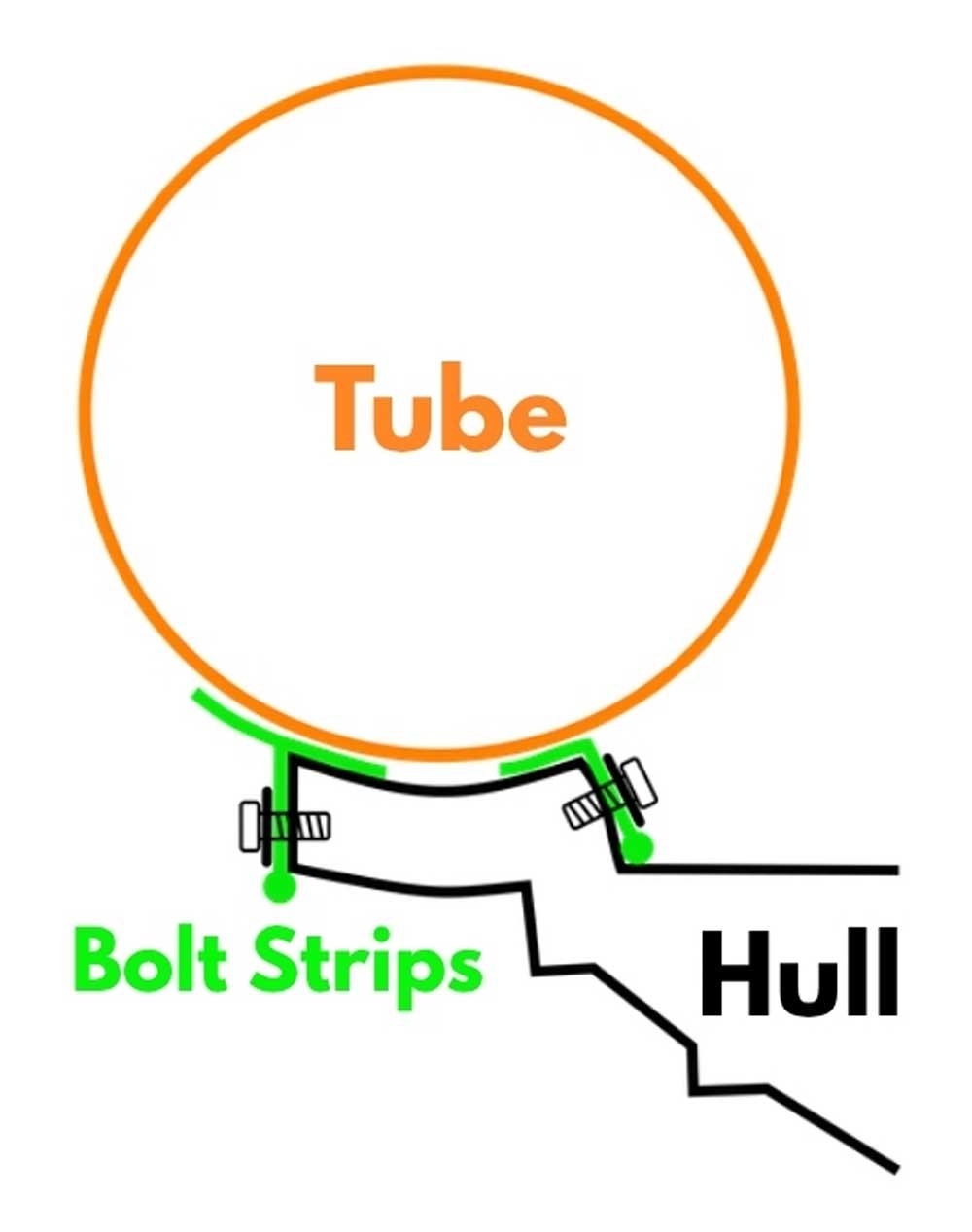
A more traditional fixing system found on some older RIBs, safety craft and specialist fleet vessels. It uses a rope or reinforced edge section built into the tube, retained by a long metal bar or track fixed along the hull. That gives mechanical retention rather than relying on adhesive bonding alone.
While less common on modern installations, the method still has value in certain applications. It has a long service history and remains relevant where operators are working with legacy craft, established fleet designs or specialist layouts. Where the original hull was designed around this style of attachment, maintaining the existing system usually makes the most sense.
- Proven heritage on older and specialist designs
- Suits certain specialist craft
- Mechanical retention rather than relying only on adhesive bonding
- Still relevant in some commercial and legacy fleet applications
Running a fleet with slide-on or bolt rope collars? We build replacement tubes to suit existing attachment systems for commercial, rescue and military operators.
Talk to us about new Hypalon tubesHow Do I Tell Which One I Have?
Three checks along the joint where the tube meets the hull will answer it in a couple of minutes. Work from the middle of the boat towards the bow, where the joint is easiest to see.
Look along the joint line
Get down level with the joint where the tube meets the hull and follow it with your eye. A bonded tube shows a continuous glue line with no gap, no track and no fastening. If that is what you see, and it almost always is, the tube is bonded on. Look then at the inside edge: a plain flange, an internal fabric strip closing the gap, or an edging rope trim tells you which bonded arrangement it is.
Feel for a track, a bar or a rope
Run a finger along the underside of the joint. A luff rope or bolt rope system has a rigid track or a long retaining bar, usually aluminium, with the tube fabric disappearing into a slot. You can feel the hard edge of it and often see the rope bulge through the fabric just above.
Check the ends, and the tube section
Look at the joint at the bow and transom. A slide-on or bolt rope system terminates in something you can undo: an end stop, a slider, or a bolted bar with visible fixings. Bonded tubes simply finish, with the skirt dressed and a bonded cover patch. While you are there, look at the tube section: a flatter inner face means a D-tube, which usually runs on luff ropes.
If You Are Still Not Sure
Send us photographs taken level with the joint: one amidships, one at the bow and one at the transom, with something in frame for scale. We identify the attachment method from photographs most weeks, and it is the first thing we need to know before quoting a retube.
What the Attachment Method Means for a Retube
The method changes the work involved, not whether the job is possible. We retube bonded, luff rope and removable boats alike, and build new tubes to suit the attachment the hull already has.
| Method | What the retube involves | What we need to check first |
|---|---|---|
| Gusset or hinge | Old tube cut away, adhesive cleaned back, flange keyed and prepared, new tube built with a matching gusset and bonded in controlled conditions | Condition of the hull flange and the gusset landing, and whether any GRP repair is needed first |
| Carrier flange, internal strip | As above, with the internal strip removed and a new one bonded in. More bonded area to clean back | How much of the old strip remains sound, and the state of the inside edge |
| Carrier flange, edging rope | As above, with the edging rope or trim detail reinstated to match the original finish | Rope or trim size and profile, so the finished detail matches |
| Slide-on | Tube unfastened and lifted off, retention system inspected, new tube built to match the existing arrangement | Whether the retention parts are serviceable or need replacing as part of the job |
| D-tube on luff ropes | Tube withdrawn from the track, track cleaned and checked, new D-section tube built with the correct rope diameter | Whether the track is straight, sound and clear, and what rope size it takes |
| Bolt rope | Retaining bar or track released, tube withdrawn, new tube built with a matching reinforced edge, bar refitted | The state of the fixings. Seized or corroded bolts add time |
Whatever the method, the tube itself is built the same way: CNC-cut Orca Hypalon panels, hand-assembled with cold-bonded seams, pressure tested before it goes near the hull. For the full process see how to retube a RIB, and for budgeting see what it costs to retube a RIB.
Ready to talk about your boat? Send the make, model, length and photographs of the tube-to-hull joint.
Get a retube quote for your attachment typeFrequently Asked Questions
How are RIB tubes attached to the hull?
RIB tubes are attached using bonded systems, mechanical retention systems, or a combination of both. Common methods include gusset or hinge bonding, carrier flanges with an internal strip or an edging rope, slide-on tubes, D-tube systems and bolt rope arrangements. Around 99 per cent of the boats we see are bonded on, with the tube glued to a flange moulded into the hull.
Which tube attachment method is best for a commercial RIB?
That depends on how the boat is used, but commercial operators often place more value on serviceability, repair access and lifecycle cost than on appearance alone. Slide-on systems and robust bonded methods are both common depending on the application. For a leisure boat, a well-executed bonded joint is hard to beat: there is nothing to corrode or wear, and it outlasts the fabric around it.
Can RIB tubes be replaced without changing the hull?
Yes. In many cases the existing hull is retained and new tubes are made to suit the original attachment system. The condition of the hull edge and the original fitting method will determine the best route.
Can the attachment method be changed at retube?
Not practically. The method is designed into the hull, either as a moulded bonding flange or an extruded track, so it is not something we change during a retube. We build the new tube to suit the attachment the hull already has.
How do I tell which attachment my RIB has?
Look along the joint where the tube meets the hull. A continuous glue line with no gap or hardware means bonded on, and the inside edge detail tells you whether it is a plain flange, an internal strip or an edging rope. A rigid track or retaining bar with the fabric disappearing into a slot means a luff rope or bolt rope system. A flatter inner tube face means a D-tube. If you are unsure, send photographs taken level with the joint at the middle, bow and transom.
Is a bonded tube harder to retube?
It takes more labour on removal, because the old tube has to be cut away and all the old adhesive cleaned off the flange before the new tube can be bonded down. That preparation is the biggest single piece of work in a retube. It is routine work for us, and it is also the stage where a rushed job fails.
Why is my tube lifting away from the hull?
On a bonded boat, a tube lifting at the bow or stern usually points to a bond failure, typically from inadequate surface preparation when it was last fitted, or from age and flexing at the highest-load points. It can often be cut back and re-bonded if the fabric is still sound. Send photographs and we will advise.
Do you retube boats with slide-on, D-tube or bolt rope systems?
Yes. We build replacement tubes to suit existing attachment systems for commercial, rescue and military operators as well as private owners. We need to know the rope diameter and the track or bar profile, or the retention type, before quoting.
Get a retube quote for your boat
Send us the boat make, model, length and photographs of the joint where the tube meets the hull. We will confirm the attachment method, the scope of the work and the price.