RIB Repairs: How to Diagnose and Repair RIB Tubes
A practical guide for owners and operators. How to find a leak, identify your tube fabric, understand what is repairable, and know the point at which a retube becomes the better answer. Written by Ribcollar, Hypalon tube specialists in Yeovil, Somerset.
- 50%
- 24hrs
- 3
- 30+
Of air loss on RIB tubes traces back to the inflation valves, not the fabric.
Minimum cure time before a glued repair goes back under full working pressure.
Tube fabrics in service: Hypalon, PVC and polyurethane. Each takes a different adhesive.
Years Ribcollar has built, repaired and replaced RIB tubes and collars.
What RIB repairs cover
Not every tired RIB needs new tubes. Plenty of boats go home for a fraction of the cost of a retube.
Short answer
RIB repairs are localised fixes to the inflatable collar of a rigid inflatable boat. The common jobs are puncture and abrasion patching, seam re-bonding, valve replacement, re-bonding tubes that have lifted from the hull, and replacing fittings such as handles, D-rings and rubbing strakes. Most damage under 50mm on otherwise sound fabric is repairable. Where the fabric itself has aged out, gone porous or delaminated across large areas, a retube gives better value than repeated repairs.
Boats arrive at the workshop with one bad seam, a leaking valve or a scuffed bow and leave repaired. Others arrive with a small puncture and leave with a quote for new tubes. The difference is the condition of the fabric as a whole.
A 200mm tear in five-year-old Orca Hypalon is a straightforward repair. A 10mm pinhole in twenty-year-old fabric that chalks on your hand and already carries three patches is a sign the tube has reached the end of its working life. The size of the visible damage tells you very little on its own.
This guide sets out how to work through that assessment, what a professional repair involves, and what to expect on cost and turnaround. For the service rather than the background, see Ribcollar RIB repairs.
The six faults that bring RIBs in for repair
Identify which one you have before buying materials or booking workshop time.
Valve leaks
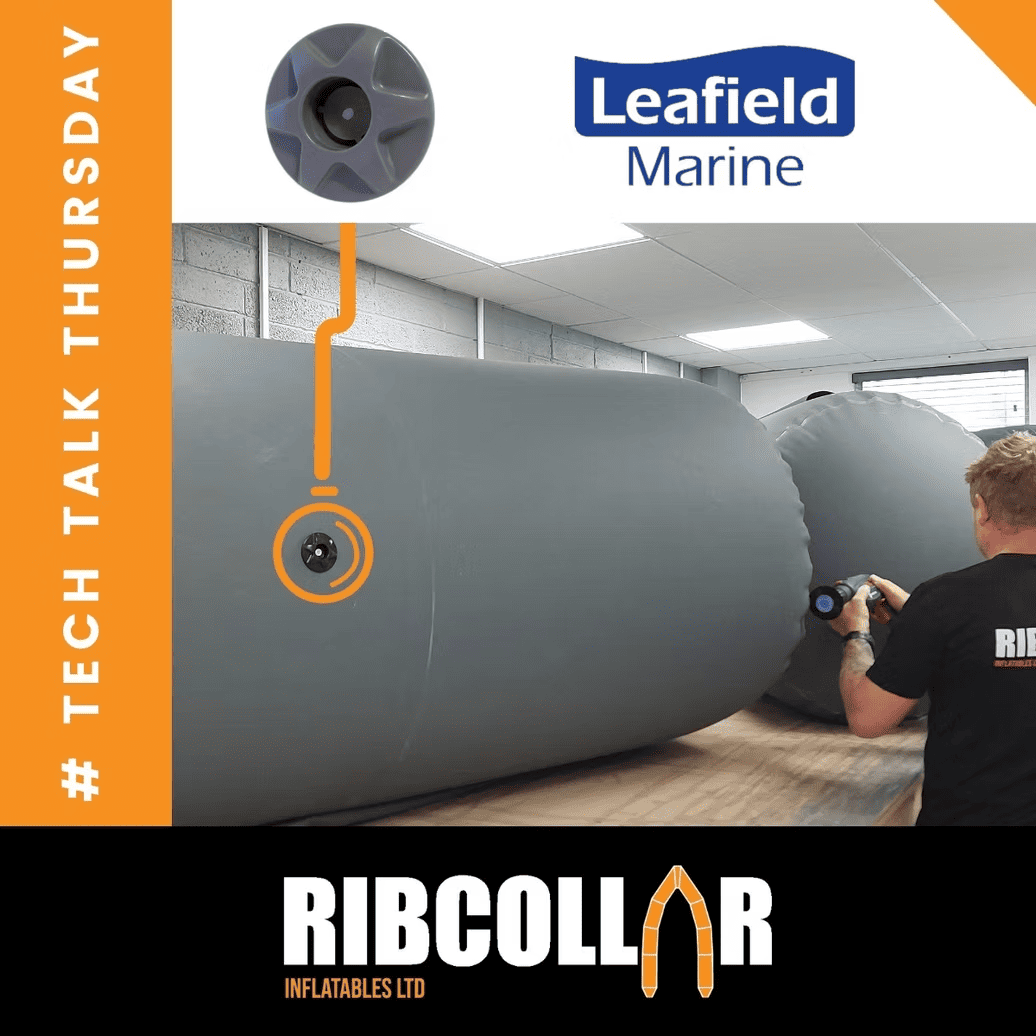
Around half of all slow deflation comes from the valve. Grit on the seal, a perished mushroom seal, a loose body or a missing cap. Leafield A7, B7, C7 and D7 valves are serviceable with a replacement seal, spring and stalk. Cheapest fault to fix and the first to rule out.
Punctures and abrasion
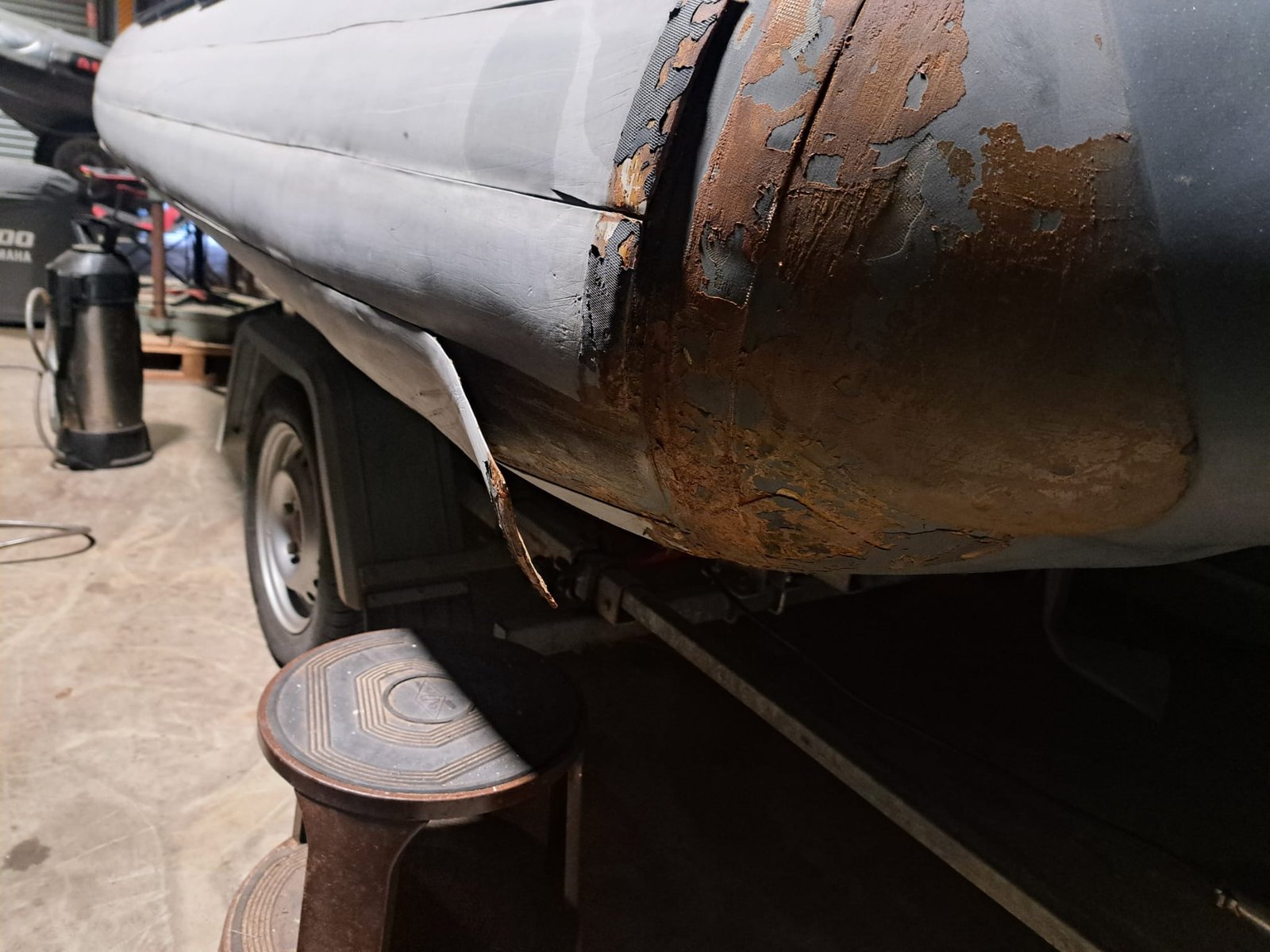
Pontoon rub, trailer bunks, fishing hooks, quay walls and outboard leg strikes. Clean punctures under about 50mm take an external patch. Larger damage, or damage in a high-stress area, wants an internal and external patch. Abrasion through to the reinforcing scrim is more serious than it looks.
Seam failure
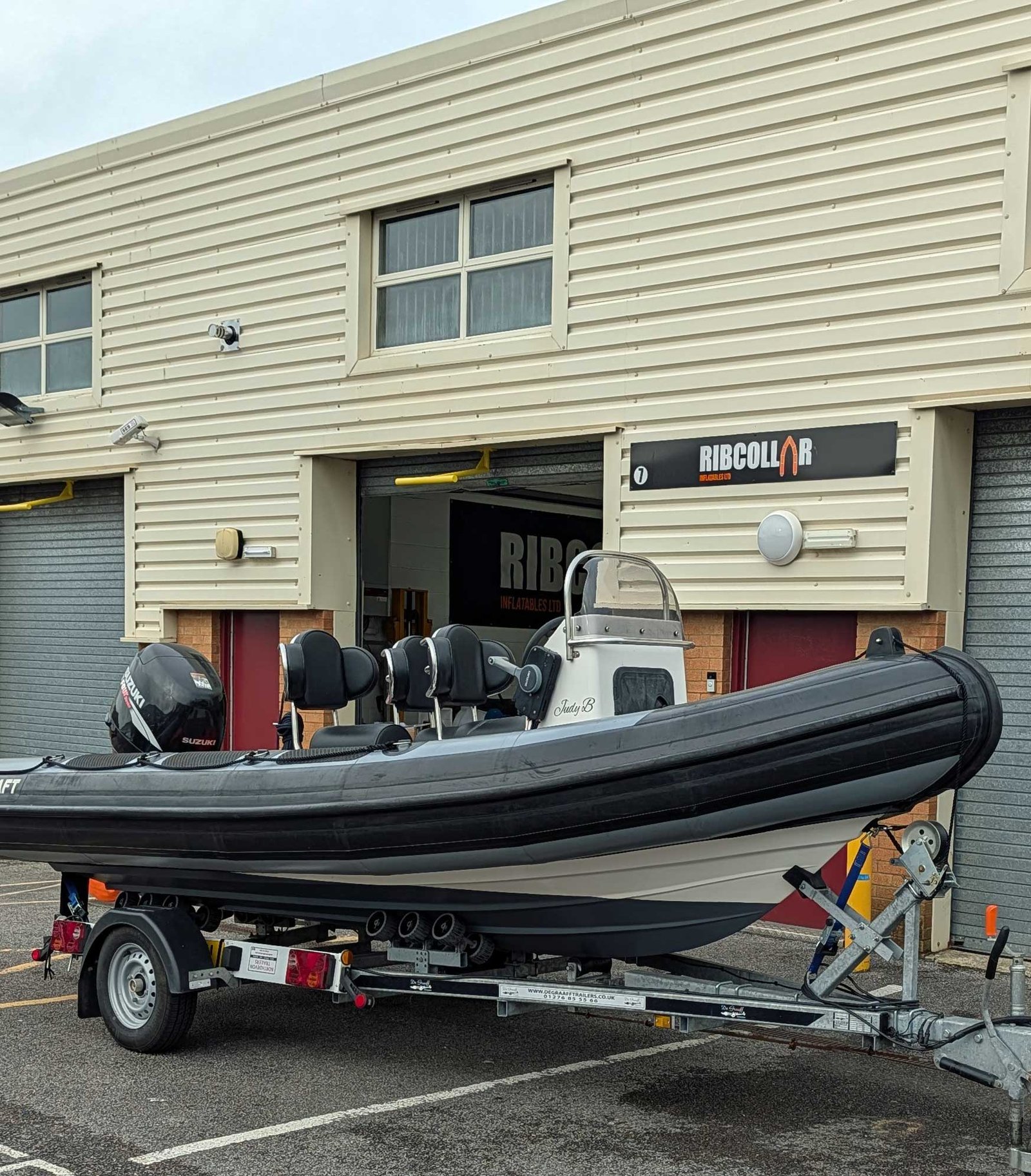
Roughly a fifth of leaks come from seams. Glued Hypalon seams open where flexing, heat and UV work on the adhesive line. A short lift is re-bonded. A seam that has opened along a whole panel, or lifts again after repair, points to adhesive that has reached its limit.
Tube-to-hull separation
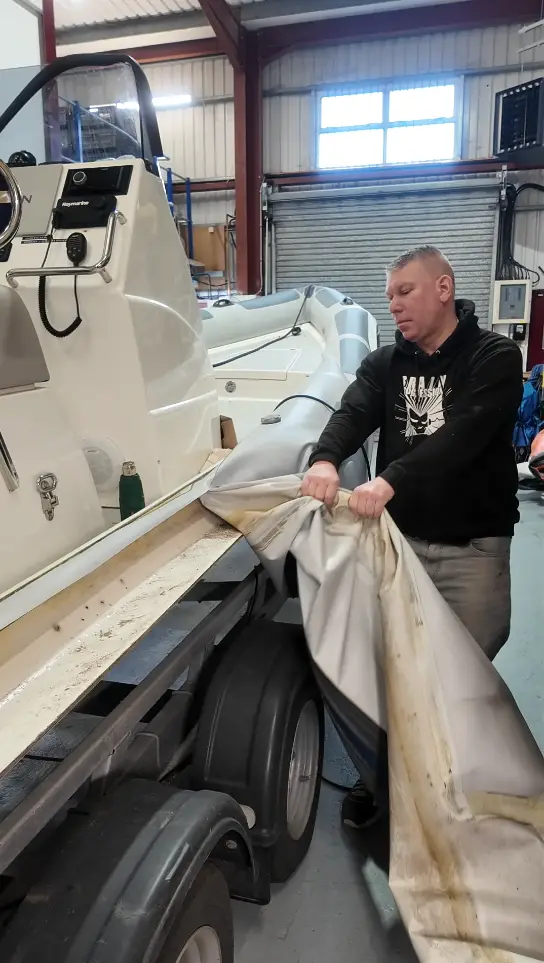
The bond between collar and GRP hull carries load every time the boat lands. When it peels, the tube lifts from the gunwale and water tracks behind it. Short sections are cleaned back and re-bonded. Widespread separation is addressed at retube. See tube attachment methods.
Fittings and wear parts
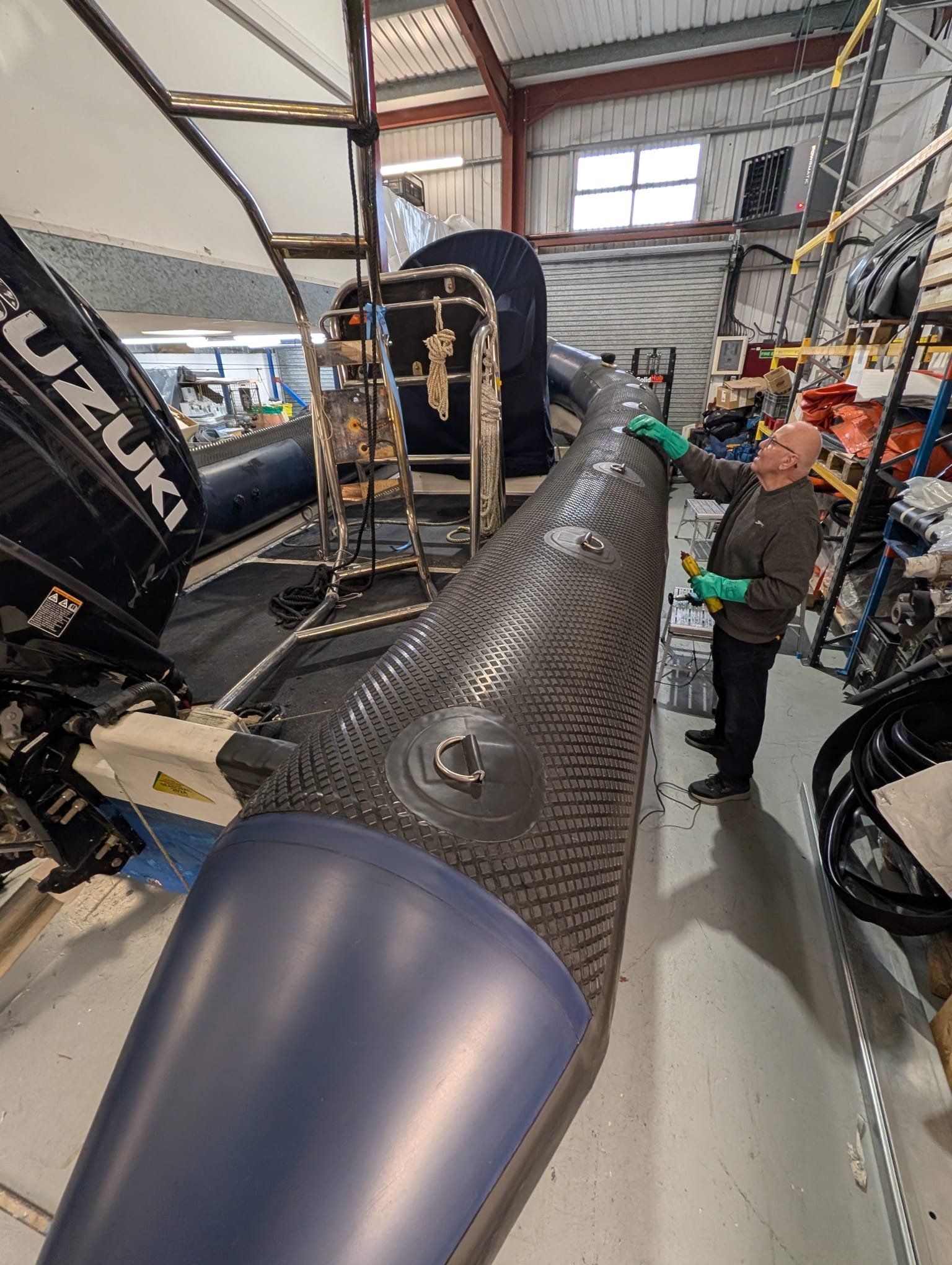
Handles pulling off, D-rings tearing, lifelines fraying, rubbing strakes lifting, worn bow and stern patches. Bonded items rather than tube faults, replaced without opening the tube. Adding wear patches at known contact points is the cheapest way to extend tube life.
UV degradation and porosity
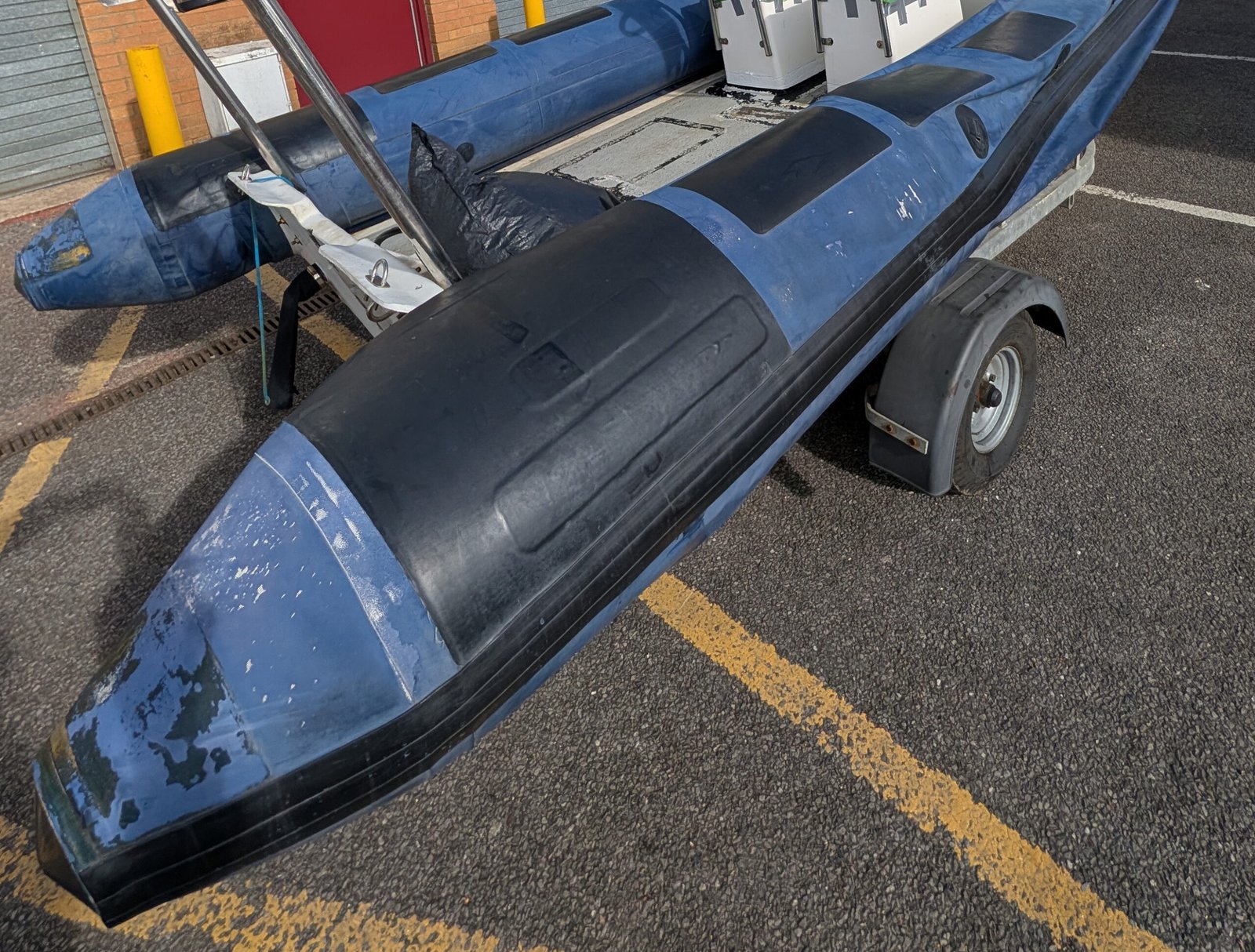
Chalking, hardening and a general loss of air across the whole tube rather than from one point. Porous fabric is not patchable, because there is no single defect to close. Soapy water shows no bubbles anywhere and the tube still drops overnight.
How to find a leak on a RIB tube
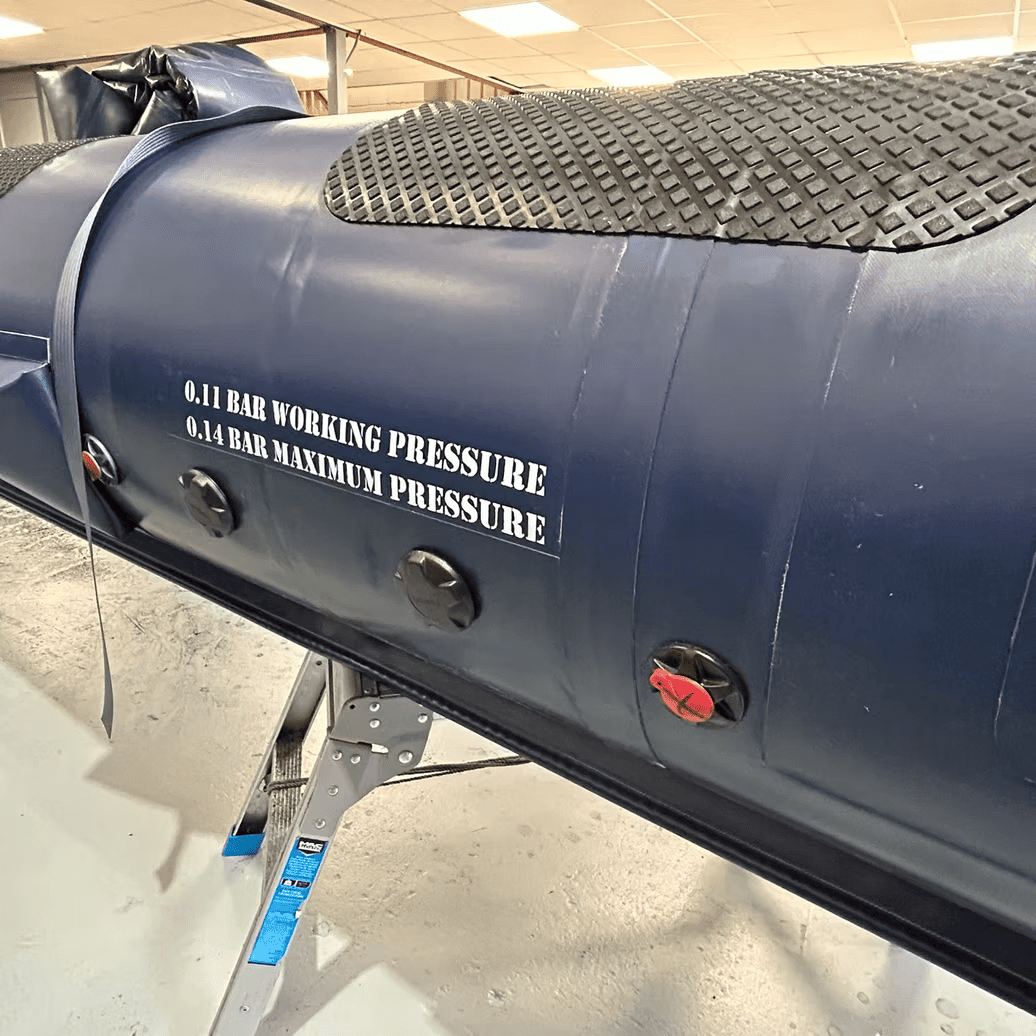
A methodical soapy water test finds the great majority of leaks in under an hour. Work through the sequence in order.
Rule out temperature first
Air pressure in a tube falls as the fabric cools. A boat inflated in afternoon sun and checked at dawn reads lower without any leak at all. Pressure loss of less than around 20 per cent over 24 hours in changeable conditions is normal. Anything faster is worth chasing.
Identify the failing chamber
Inflate all chambers to working pressure and leave the boat overnight. In the morning, feel each chamber in turn. A RIB collar is divided by internal bulkheads, so one soft chamber narrows the search area straight away. Note where the bulkheads sit before you start looking.
Mix a strong soap solution
Washing-up liquid and water at roughly half and half, in a spray bottle or applied with a brush. A thin mix will not hold a bubble long enough to spot a pinhole. Inflate the chamber to full working pressure before testing.
Test the valve
Start here. Draw soap across the valve inlet until a film forms over it and watch for growth. Then flood the valve body and the ring where it seats into the fabric. Fit the cap and test again. Half of all reported leaks stop at this step.
Work the seams
Cover the cross seams at the cone ends first, then the seam crosses where circumferential and longitudinal seams meet, then run the full length of every glued seam. These junctions are where the majority of seam leaks show. Give each area a minute to bubble before moving on.
Cover the fabric and fittings
Sweep the whole chamber, paying attention to scuffs, hook marks, the underside where trailer bunks bear, and the bond line where the tube meets the hull. Test around handles, D-ring patches and the ends of the rubbing strake, since air tracks along a strake and surfaces some distance from the hole.
Mark, dry and assess
Ring every bubble site with a pencil or chalk. Rinse the soap off and dry the tube fully before any repair work, because adhesive will not bond to a damp or contaminated surface. Photograph each marked area for a repair quote.
If nothing bubbles
A chamber that drops overnight with no bubbles anywhere points to general fabric porosity, or a leak inside a bonded area such as under a rubbing strake. Both need professional assessment.
Identify the fabric before you buy adhesive
The wrong adhesive will not stick, and it contaminates the surface for the repair that follows.
| Fabric | How to identify | Seam type | Adhesive | Solvent | Surface prep |
|---|---|---|---|---|---|
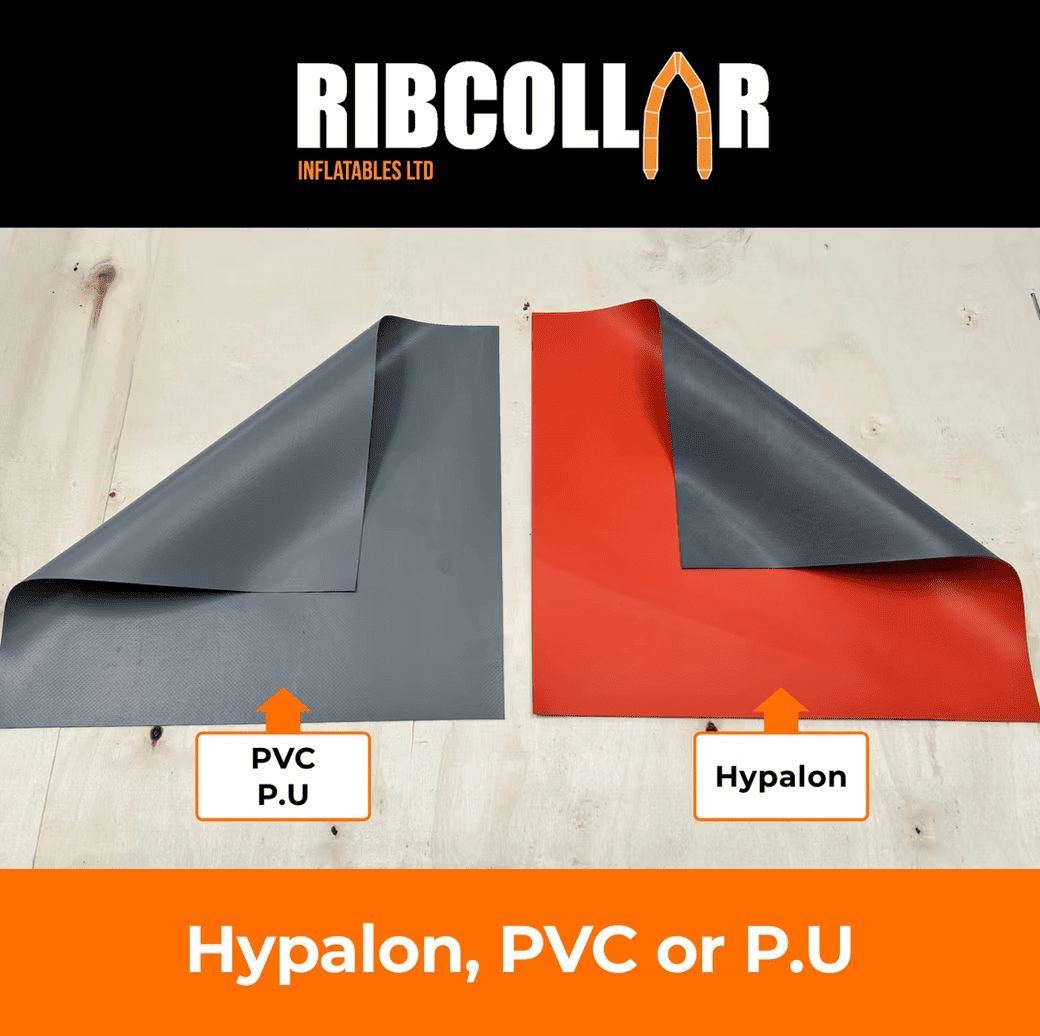
| Hypalon / CSM (Orca) | Matt, slightly rough feel. Chalks a fine powder onto a wet finger when aged. Cut edge shows a fabric weave between coatings. | Glued and taped, visible overlap | Two-part CSM adhesive such as Bostik 2402, Polymarine or Apollo | Toluene, or the adhesive maker's own cleaner | Always abrade. 60 to 80 grit until uniformly matt and the texture is removed |
| PVC | Shiny, plastic feel. Soft in strong sun, stiff in cold. Common on boats built before around 2015 and on most SIBs. | Welded, flat and smooth, or glued on older boats | PVC-specific two-part adhesive | MEK | No abrasion on sound fabric. Key lightly where old and hardened, or where previous adhesive remains |
| Polyurethane (PU) | Rare. Very tough, thin, low-stretch. Often on high-end commercial and military craft. | Welded | Two-part CSM adhesive such as Bostik 2402 | Acetone or toluene | No abrasion on newer fabric. Fine abrasive on older material |
Not sure which you have
Work through What material is your RIB tube made from? before committing to any repair. Ribcollar carries out Hypalon repair work only.
A note on Hypalon finishes
Orca Hypalon comes in smooth, fabric impression, perlage, carbon and honeycomb finishes. Textured finishes must be abraded back to a smooth surface before bonding, or the adhesive sits on the high points only and the patch lifts at the edges. Fabric marked NB, or non-buff, refers to the reverse face of the material and does not remove the need to prepare the outer face.
Colour and finish also matter for a visible repair. See the Orca Hypalon colour chart for matching, and bear in mind that existing fabric will have faded under UV.
How RIB tube repairs are carried out
Five methods cover almost all repair work. The right one depends on size, location and how much load the area carries.
| Method | Suits | What it involves | Durability |
|---|---|---|---|
| External patch | Clean punctures and cuts under about 50mm in low-stress areas | Round patch cut 50mm larger than the damage all round, both faces abraded and cleaned, two thin adhesive coats with an hour between, warmed, rolled out from the centre, pressure released immediately after rolling | Long term on sound fabric |
| Internal and external patch | Tears over 50mm, damage on a seam or near a bulkhead, any load-bearing area | The opening is enlarged where needed for access, an internal patch is bonded behind the damage to take the load, then an external patch is bonded over the top | Strongest field repair |
| Seam re-bond | Lifted or leaking glued seams | The seam is opened back to sound adhesive, both faces are cleaned and prepared, then re-bonded and rolled. A cover strip is added where appearance and durability both matter | Good, where surrounding fabric is sound |
| Panel or section replacement | Large damaged areas, badly degraded cones, repeated failure in one zone | The damaged panel is cut out and a new section of matching Orca Hypalon is fabricated and bonded in. Workshop work, not a field repair | As new in the replaced area |
| Fitting replacement | Handles, D-rings, lifeline patches, rubbing strakes, wear patches, valves | The old fitting is removed, adhesive residue is cleaned back to sound fabric, and the new fitting is bonded. Valves are changed with the tube deflated using a valve spanner | Long term |
Three things that decide whether a repair holds
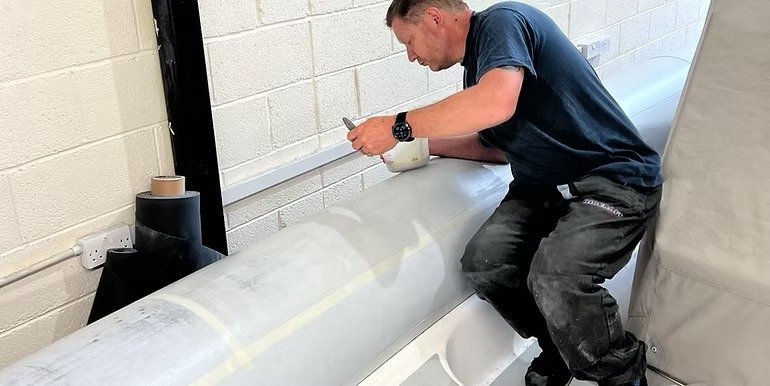
- Preparation. Hypalon must be abraded until uniformly matt, cleaned with the correct solvent, and bonded while still clean.
- Two coats, correctly timed. A thin prime coat left to dry for around an hour, then a second coat on both faces left tacky for a few minutes. Thick single coats trap solvent and stay soft.
- Cure before load. Leave the repair at least 24 hours before inflating to working pressure. Repairs below the waterline need longer, and the area must be completely dry before work starts.
Working with two-part adhesives and solvents needs ventilation, gloves and eye protection. Read the safety data for the products you use.
Repair or retube? How to make the call
The honest test is whether the rest of the tube has enough working life left to justify the repair.
Repair is the right answer when
- Damage is localised and the surrounding fabric is still flexible
- The tube holds pressure everywhere except the identified fault
- The fabric does not chalk heavily onto a wet hand
- Seams elsewhere on the boat are sound and flat
- There are few or no previous patches nearby
- The fault is a valve, a fitting or a single seam section
- The boat is otherwise doing the job you need it to do
A retube is the better investment when
- Pressure drops across the whole chamber with no findable leak
- The fabric is hard, brittle or chalking across large areas
- Multiple seams have opened, or repaired seams lift again
- The tube has separated from the hull along a long run
- Repair quotes reach a meaningful share of retube cost
- The boat is commercial, rescue or passenger-carrying
- Tube appearance matters commercially and patching will show
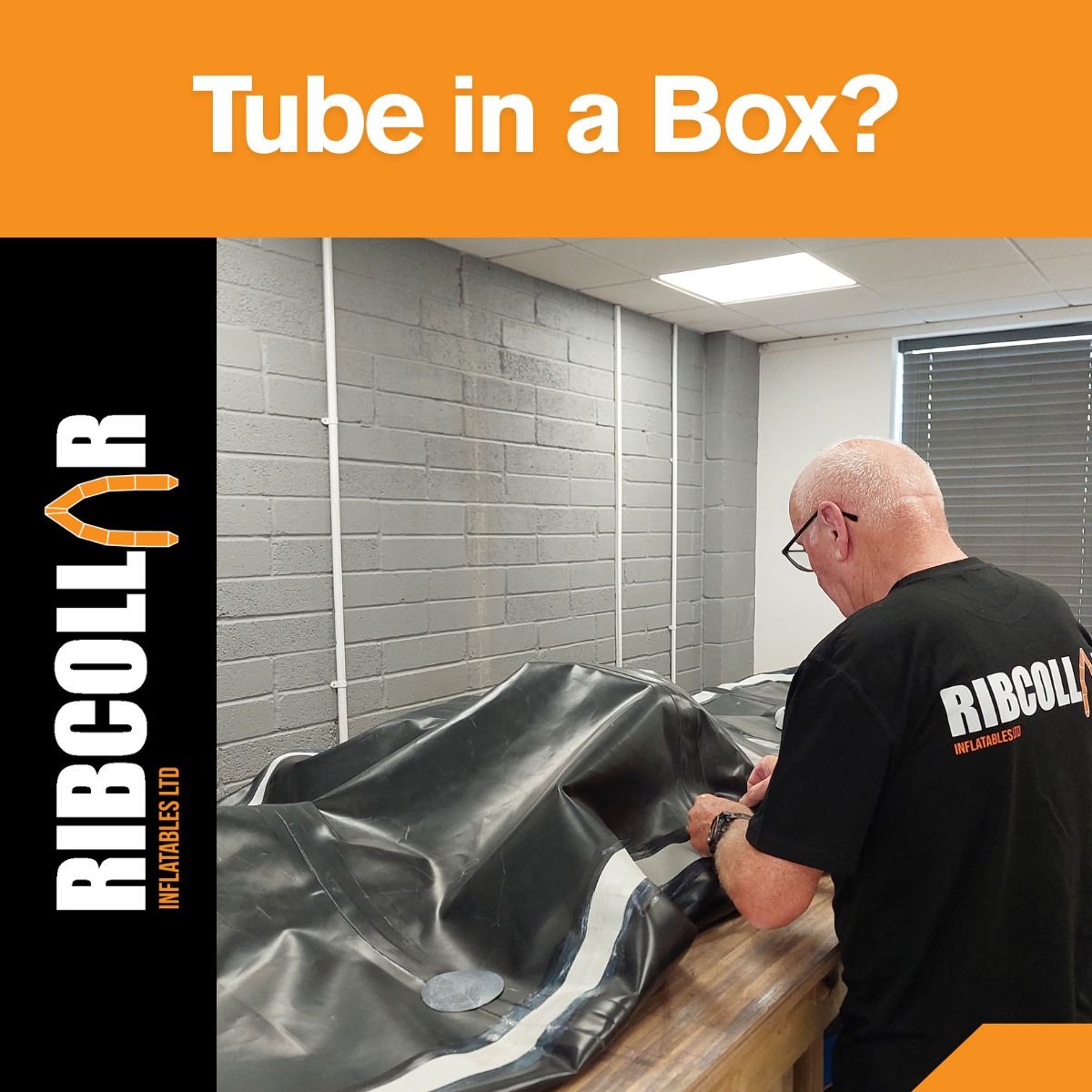
Where a retube is the answer, the process, timings and fabric choices are set out in How to retube a RIB, and the grade decision in Orca 828 vs 866.
What RIB repairs cost in the UK
Repair pricing is driven by access, preparation time and materials rather than the size of the hole.
The figures below are indicative ranges to help you frame a decision. Every job is quoted on inspection or from photographs.
| Job | Typical range | What drives the price |
|---|---|---|
| Valve service or replacement | £60 to £150 per valve | Valve type, access, whether the tube must be opened |
| Single puncture or abrasion patch | £75 to £200 | Size, location, colour matching, internal patch required |
| Seam repair | £150 to £450 | Length of seam, access, whether a cover strip is fitted |
| Fitting replacement | £80 to £300 | Number of fittings, removal of old adhesive, parts cost |
| Tube-to-hull re-bond, short section | £200 to £600 | Length, hull preparation, deflation and re-fit time |
| Panel or section replacement | £450 to £1,200 | Panel size, fabric colour and finish, fabrication time |
| Full retube, for comparison | Around £1,200 per running metre | A 6.0m RIB works out at roughly £7,000 depending on fittings and specification |
Please note
Indicative UK guide prices as at 2026, excluding VAT, transport and collection. Confirm current pricing with Ribcollar. Retube figures are drawn from our cost to retube a RIB guide.
Why a small repair sometimes costs more than expected
A 20mm puncture takes minutes to patch. Deflating the boat, gaining access behind a console or under a strake, drying the area properly, preparing both faces, allowing an hour between adhesive coats and leaving 24 hours to cure takes considerably longer. You are paying for preparation and cure time, not for the patch.
Mobile repair or workshop repair?
Both have a place. Size of job, weather and cure conditions decide which.
Mobile repair
- Suits small patches, valve changes and fitting replacement
- Boat stays on its trailer, mooring or hardstanding
- Dependent on dry, still conditions and workable temperature
- The repair still needs several hours undisturbed to cure
- Below the waterline, the area must be thoroughly dried out first
Workshop repair
- Suits seam work, panel replacement, hull re-bonding and multi-fault boats
- Controlled temperature and humidity give a more reliable bond
- Tubes are removed where full access is needed
- Colour and finish matched against stock fabric
- The whole boat is assessed, so nothing is missed
What to send for a repair quote
- Boat make, model and overall length
- Tube fabric if known, and the approximate age of the tubes
- Clear photographs of each damaged area, taken with the tube inflated
- A wider shot of the whole tube so general fabric condition is visible
- A note on how fast the chamber deflates and which chamber it is
- Any previous repair history
Photographs of the general condition matter as much as the close-ups. They are what tells us whether a repair is worth doing.
Six habits that cut RIB repair bills
Small, cheap and dull. All six add years to a set of tubes.
Check valve caps
Fit them every time and keep the seats clean. Grit under a valve seal is the single most common cause of overnight pressure loss.
Rinse and dry after use
Fresh water removes salt and grit that abrade the fabric coating. Avoid solvent-based cleaners, which strip the surface.
Cover the tubes
UV is what ages Hypalon. A cover over a boat left on a trailer or mooring adds years to the fabric.
Fit wear patches early
Bonded patches at bow, quarters and trailer bunk contact points cost a fraction of repairing abrasion through to the scrim.
Do not over-inflate in the sun
Pressure rises sharply as fabric heats. An over-inflated tube left in direct sun strains seams and bulkheads.
Deal with small faults quickly
A lifting seam edge or a loose handle patch takes a modest repair now and a much larger one after a season of water ingress.
Common RIB repair questions
The questions owners ask most often before booking work in.
Can a RIB tube be repaired, or does it need replacing?
Most localised damage is repairable if the surrounding fabric is still sound. Punctures, cuts, seam lifts, valve faults and loose fittings are all routine repair work. Replacement becomes the better route when the fabric has hardened, gone porous or delaminated across large areas, or when several seams have failed. A tube that loses pressure with no findable leak is telling you the material itself has reached the end of its life.
How do I find a slow leak in a RIB tube?
Inflate to full working pressure and apply a strong washing-up liquid and water mix, roughly half and half. Test the valve first, then the cross seams at the cone ends, then the seam junctions, then every seam along its length, then the whole fabric surface including the underside and the bond line where the tube meets the hull. Mark each bubble site. Around half of all slow leaks turn out to be at the valve.
What glue is used for Hypalon RIB repairs?
A two-part CSM adhesive. Bostik 2402, Polymarine and Apollo products are all widely used in the trade. PVC needs a PVC-specific two-part adhesive with MEK as the solvent, and the two are not interchangeable. Applying the wrong adhesive contaminates the surface and makes the correct repair harder afterwards, so confirm your fabric before buying anything.
How long does a RIB repair take to cure?
Leave a glued repair at least 24 hours before returning the tube to full working pressure. The adhesive itself goes off much sooner, but full bond strength develops over the first day. Repairs at or below the waterline need the area completely dry before work starts and benefit from longer. Rushing cure time is the most common reason a repair lifts.
How much do RIB repairs cost?
A valve replacement typically runs £60 to £150. A single puncture patch is usually £75 to £200. Seam repairs range from £150 to £450 depending on length and access, and panel replacement from £450 upwards. For comparison, a full retube works out at around £1,200 per running metre, so roughly £7,000 for a 6.0m RIB. Preparation and cure time drive repair cost more than the size of the damage.
Why does my RIB tube keep losing air with no visible damage?
Three likely causes. First, temperature: air pressure falls as fabric cools overnight, and a loss under about 20 per cent in 24 hours is normal. Second, the valve, which accounts for around half of genuine leaks. Third, general fabric porosity on older tubes, where air passes through the material rather than escaping from one defect. Porosity is not repairable by patching and points to a retube.
Is a leaking seam on a RIB repairable?
A short seam lift on otherwise sound fabric is opened back to good adhesive, prepared and re-bonded, often with a cover strip over the top. That is straightforward work. Where several seams have opened, or a repaired seam lifts again within a season, the adhesive line across the tube has generally reached its limit and a retube is the sounder investment.
Should I repair a RIB tube myself?
Small punctures on accessible, sound fabric are within reach of a careful owner working with the correct adhesive and proper surface preparation. Seam work, internal patches, tube-to-hull re-bonding and anything on a commercial or passenger-carrying boat belong in a workshop. A poorly prepared DIY repair leaves adhesive residue that has to be cleaned off before a professional repair, which adds cost.
Does Ribcollar repair PVC tubes?
No. Ribcollar works in Hypalon only, across repair, tube replacement and new build. If your tubes are PVC, identify the material first using our fabric identification guide, then approach a specialist who works in that material.
Where is Ribcollar based and what area do you cover?
Ribcollar Inflatables Ltd works from Lufton Heights Commerce Park in Yeovil, Somerset, and takes boats in from across the UK. We handle leisure, commercial, professional, military and rescue RIBs, covering repair, collar and sponson replacement, full retubing and new Hypalon tube manufacture. Call 01935 722988 or email sales@ribcollar.com.
How long will a repaired RIB tube last?
A correctly prepared and bonded patch on sound fabric will outlast the surrounding material. In practice, the working life of the repair is set by the condition of the tube around it. Repairs on fabric that is already hardening buy a season or two. Repairs on tubes with plenty of life left are permanent for practical purposes.
What causes RIB tubes to fail in the first place?
UV exposure is the main driver of fabric ageing, which is why covered boats last considerably longer. Abrasion from pontoons, quay walls and trailer bunks wears through the outer coating. Heat cycling and flexing work on glued seams over the years. Impact damage and fishing hooks account for most sudden punctures. Salt and grit left on the fabric accelerate surface wear.
Send us photos and we will tell you honestly what your boat needs
Ribcollar assesses the tube as a whole before quoting. If a repair is the right answer, we will say so. If your money is better spent on a retube, we will tell you that too. Send the boat details, clear photographs of the damage and a wider shot of the tubes.